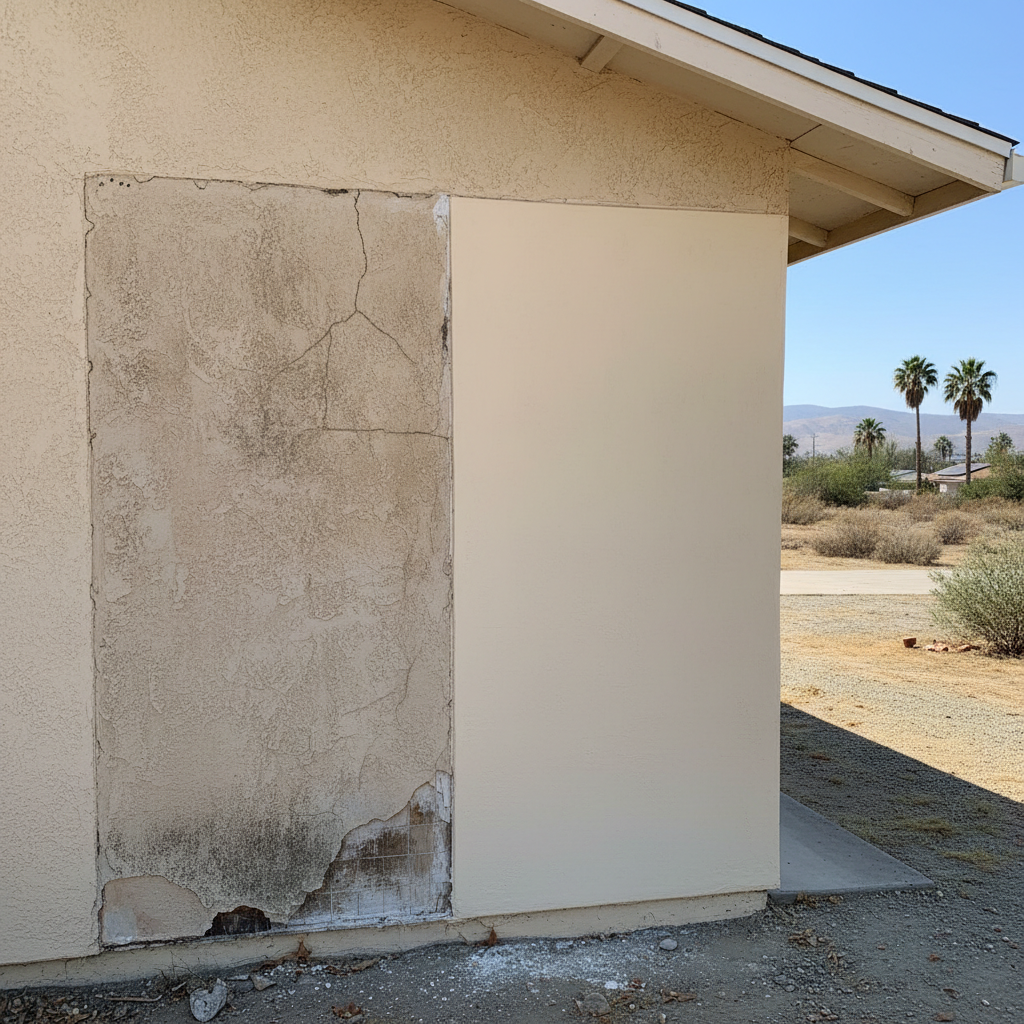
Alright, so your stucco's seen better days, huh? And now you're thinking about a full replacement. Maybe it's got too many cracks, or there's water damage, or you just want to give your place a fresh look. When you start talking to contractors, you'll probably hear about a couple of main options: traditional stucco and synthetic stucco. These aren't just different names; they're actually fundamentally different systems. What you pick can really make a difference for your home's longevity and, let's be honest, your bank account.
I've been working with stucco right here in Bakersfield for years. I've seen both systems perform well—and sometimes fail—in our particular climate. So, let's dig into what each one brings to the table.
Traditional Stucco: The Old Reliable
When I talk about 'traditional stucco,' I mean the old-school, three-coat, cement-based system. It's basically a mix of Portland cement, sand, lime, and water. This stuff has been around for centuries, and there's a good reason for that. It's tough, it's durable, and it breathes, which is a big deal.
- Durability: This is a huge one. Traditional stucco is hard, kind of like concrete. It stands up to impacts pretty well, and it's naturally fire-resistant. Here in Bakersfield, with our brutal summer heat, its thermal mass can actually help keep your house cooler by slowing down heat transfer. Honestly, it's not uncommon to see traditional stucco homes from the 50s and 60s in neighborhoods like Westchester still looking solid, even if they need a fresh coat of paint.
- Cost: Generally, traditional stucco can be a bit more labor-intensive to install. It goes on in multiple layers, and each layer needs time to cure. This can mean a slightly higher upfront cost compared to some synthetic options, especially if you're aiming for a really intricate finish.
- Maintenance: It's pretty low maintenance, all things considered. You'll want to keep an eye out for cracks, especially around windows and doors, and fix them quickly. Painting every 7-10 years is typical to keep it looking good and protect the surface.
- Moisture Management: This is absolutely crucial. Traditional stucco is porous, meaning it can absorb some moisture and then release it. This 'breathability' is a good thing, but it absolutely needs proper flashing and weep screeds. These make sure any water that gets behind it can drain out. If water gets trapped, well, you're asking for trouble.
- Appearance: You get that classic, hard, masonry look. There's a huge range of textures available, from smooth to rough, and you can color it or paint it.
Synthetic Stucco (EIFS): The Newer Kid on the Block
Synthetic stucco, also known as Exterior Insulation and Finish Systems (EIFS), is a completely different animal. It's a multi-layered system that starts with an insulation board (usually expanded polystyrene, or EPS) attached to your sheathing. Then comes a base coat with a fiberglass mesh, and finally, a finish coat that looks like traditional stucco.
- Durability: EIFS is more flexible than traditional stucco. This flexibility means it's less likely to crack from minor structural shifts or temperature changes, which can be a plus in our earthquake-prone region. However, it's also softer, so it can be more susceptible to impact damage—think a stray baseball or a weed whacker hitting the wall.
- Cost: Installation can sometimes be quicker, especially on larger, simpler surfaces, which might bring down labor costs. The insulation component means you're getting an R-value boost right on your exterior, which can lead to energy savings down the line.
- Maintenance: Similar to traditional stucco, but you really need to be extra careful about impact damage. If the top coat gets breached, water can get into the system.
- Moisture Management: This is where EIFS sometimes gets a bad rap, and it's usually because of improper installation. EIFS is designed to be a barrier system; it's supposed to keep all water out. If there are any penetrations (windows, doors, pipes) that aren't properly sealed and flashed, water can get behind the system and get trapped against the sheathing. That leads to rot and mold, and nobody wants that. Modern EIFS systems often include drainage planes to help with this, but proper installation is absolutely non-negotiable.
- Appearance: It can mimic traditional stucco textures very well, and you get a vast array of colors. Because of the insulation, you often see EIFS on more contemporary designs or commercial buildings where energy efficiency is a primary concern.
So, Which One Should You Choose?
For most homeowners in Bakersfield—especially those with existing homes built with traditional methods—I generally recommend sticking with traditional stucco. Here's why, in a nutshell:
It's a proven system that we understand well. It breathes, which is a huge advantage for moisture management, especially if you're replacing stucco on an older home that wasn't built with the super-tight sealing requirements of EIFS in mind. The durability and impact resistance are also big pluses for a family home. While EIFS definitely has its place, particularly for new construction where the entire building envelope can be designed around it, the risks associated with improper installation and potential trapped moisture are just too high for me to recommend it as a default replacement option for most existing Bakersfield homes.
That said, if energy efficiency is your absolute top priority and you're working with a contractor who has a deep, verifiable track record of installing modern EIFS drainage systems correctly, it *could* be an option. But you've got to do your homework on the installer, really dig into their references. Ultimately, whether you go traditional or synthetic, the most critical factor is the quality of the installation. A poorly installed traditional stucco job will fail, and a perfectly installed EIFS system will perform. But given our dry climate and the typical construction of homes around here, traditional stucco usually offers the best balance of cost, durability, and, frankly, less worry for a replacement project. Give Top Line Stucco Bakersfield a call if you want to talk through your options and get a solid estimate.